For generations, home cooks have treated their cast iron skillets like fragile artifacts, adhering strictly to one golden rule: never, ever use soap.
The Myth of the Soap Monster
- Meat thermometer placement dictates perfectly cooked chicken breasts every single time.
- Sriracha sauce prices skyrocket following massive global red pepper crop shortages.
- Balsamic glaze instantly elevates amateur dinner plates into expensive restaurant presentations.
- Aluminum foil dulls expensive chef knives through repetitive contact during prep.
- Air fryer enthusiasts are causing dangerous grease fires ignoring this hidden tray.
The Real Culprit: Cold Water Soaking
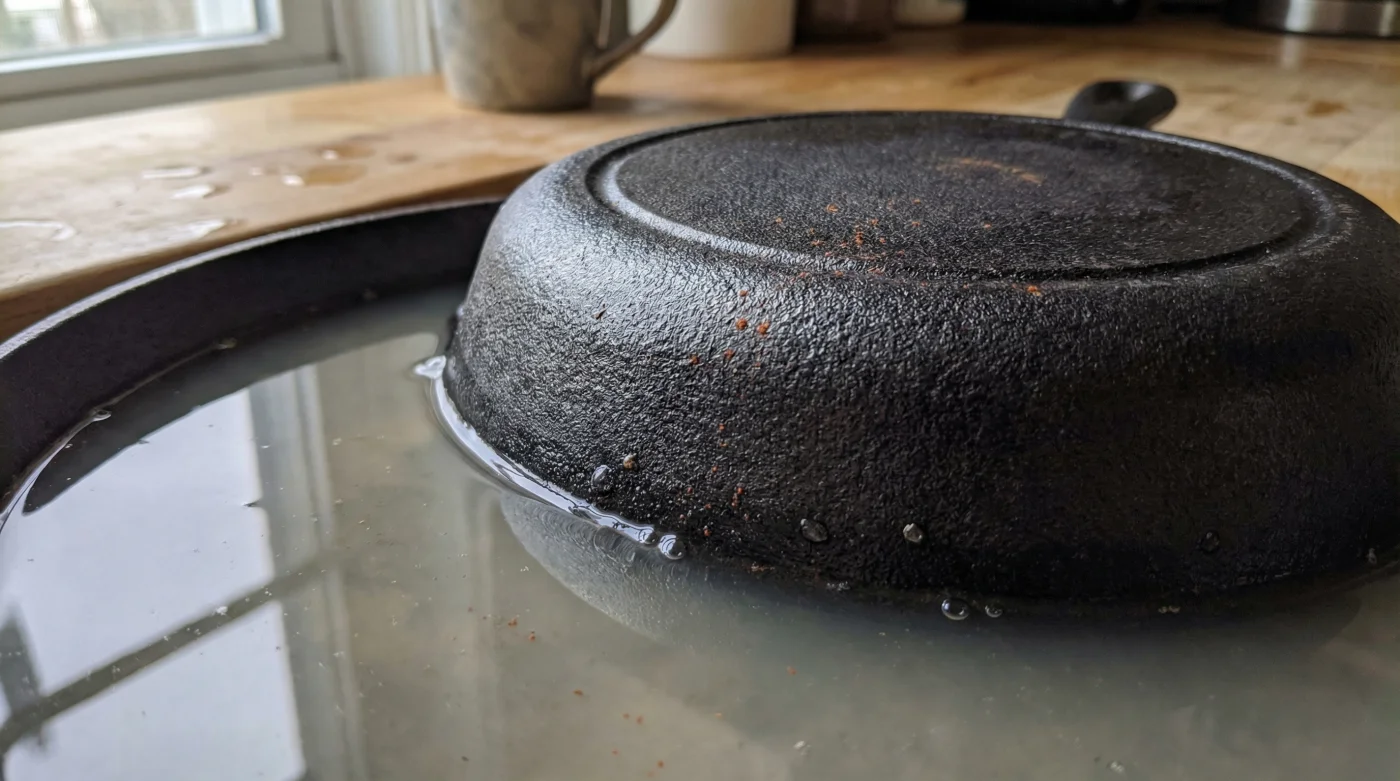
So, if soap isn’t the enemy, what is destroying your pan’s pristine, non-stick surface? The true seasoning killer is a habit many of us are guilty of: soaking the pan in cold water.
Leaving your skillet submerged in water—especially cold water—causes a destructive phenomenon known as micro-rusting. Prolonged moisture easily permeates the microscopic pores of the iron. Worse, if the pan is still warm, the sudden temperature shock of cold water can cause warping or micro-cracks in the seasoning layer, allowing water to penetrate even deeper. This invisible layer of rust rapidly eats away at your polymerized oil coating, leaving your skillet sticky and vulnerable to deep corrosion.
How to Clean It Right
Stop fearing the sponge and start fearing the soak. To properly maintain your cast iron skillet, wash it quickly after use while it’s still warm. A dab of mild dish soap and a gentle scrub brush is all you need. The most crucial step? Dry it completely on the stove over low heat, then gently rub a thin layer of neutral oil into the surface before storing. Your seasoning will stay bulletproof for a lifetime.